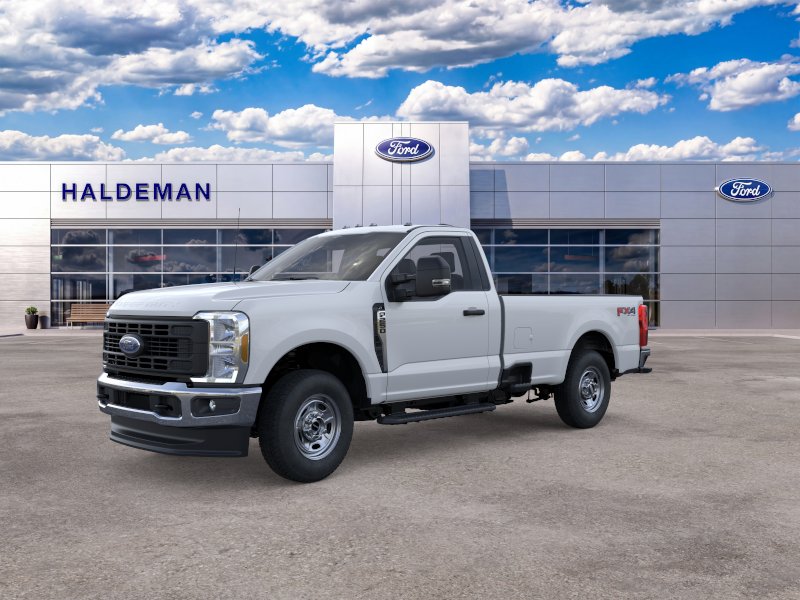
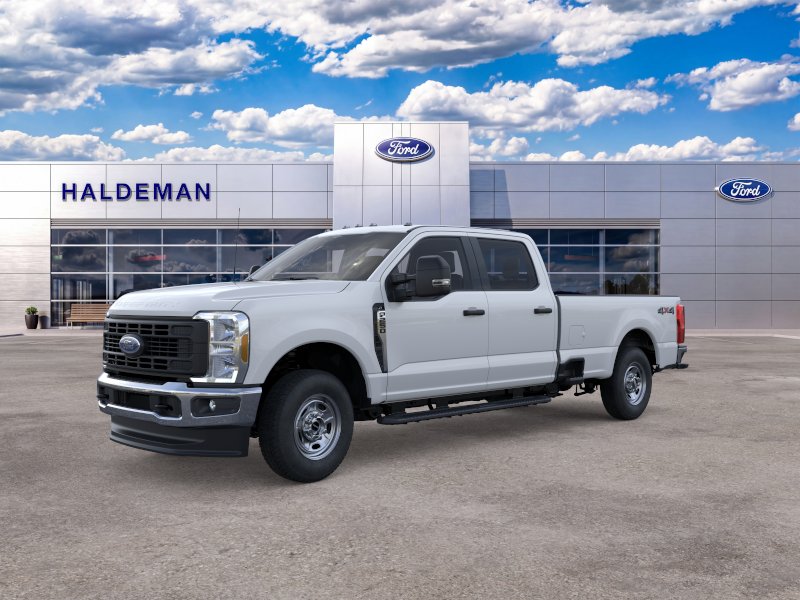
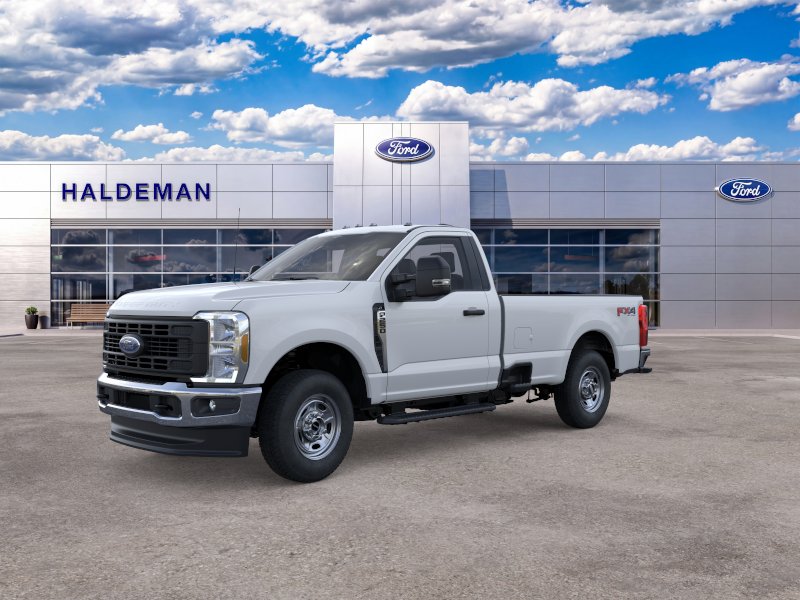
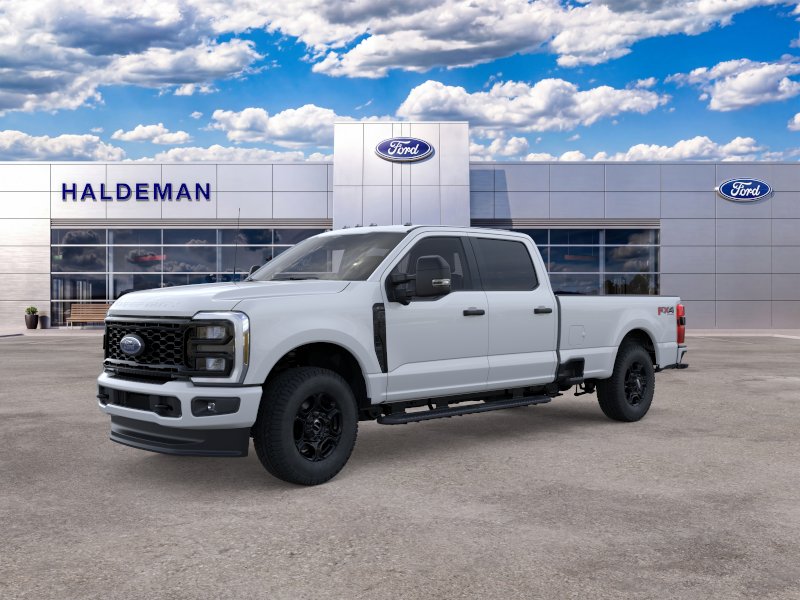
New Ford Super Duty F-250 SRW for Sale Near Philadelphia, PA





Frequently Asked Questions about New Ford Super Duty F-250 SRW Philadelphia, PA
Is an F-250 too much truck if I only tow a few times a year?
It depends on what you pull rather than how often. If the load is genuinely heavy, occasional use does not make a lighter truck adequate. Bring the trailer details and the answer usually falls out in about five minutes.
What should I check on a truck I am buying to tow with?
Hitch and receiver, trailer wiring, the brake controller connection, and the mirrors. Those four cost very little to specify correctly at purchase and are irritating and expensive to retrofit afterward. Send us what you pull and we will shortlist accordingly.
How is an F-250 different from a half ton for towing?
The gap shows up once the trailer is attached, not in anything a brochure claims either truck can do. You feel it as the trailer having less say in where you end up, and as brakes that still feel like brakes at the bottom of a long hill. Ten minutes behind one is usually enough.
Why single rear wheels rather than duals?
Width, mainly. Single rear wheels keep the truck manageable through the months it is not towing anything, which for a recreational owner is most of the year. If you are hauling heavy loads daily that calculation changes, and we should talk about a dually instead.
How should I think about financing a truck I use recreationally?
Match the term to how long you actually plan to keep it, and count insurance, registration, and off season storage alongside the payment. Heavy duty trucks used gently last a long time, so owners often keep them longer than they expected. We would rather build something you are still comfortable with in year four.
Have Additional Questions?
Wondering if the F-250 covers your trailer? Send the loaded weight and how it hitches, and we can place it on the ladder for you.
We can check the hitch and wiring setup on specific trucks before you drive over.
Get in touch with a rough picture of your towing year and we can start narrowing trucks.
Paying for a Truck You Use Hard a Few Times a Year
An F-250 bought for towing is a different financial conversation than a truck bought for work. It earns nothing between trips, so the whole cost sits on the enjoyment side of the ledger, and buyers are right to think carefully about that.
None of which makes it a poor purchase. It makes it one where the term you choose and how many years you expect to own it matter more than usual. A heavy duty truck used gently holds up for a very long time, and buyers who plan around that tend to be happier with the arithmetic.
- A term matched to how long you genuinely intend to keep it
- Insurance and registration counted alongside the payment
- Storage for the truck and the trailer between seasons
Talk to us about how the truck fits your year rather than just your month. Haldeman Ford would rather structure something you stay comfortable with than sell you a payment you resent by the second summer.
Recreational buyers routinely underestimate how long they will keep a heavy duty truck. Planning for that changes which deal makes sense.
Where the Three Quarter Ton Line Actually Begins
The F-250 is where the Super Duty line starts, and that starting point sits a long way above a half ton. The frame, brakes, and suspension are built for sustained load rather than occasional load, which is the whole difference between a truck that tows and a truck built to tow.
On a trip that shows up as composure. A trailer that would push a lighter truck around simply does not, and the truck slows the way you expect at the end of a long descent. It is the difference between a drive you concentrate through and one you relax into.
- Built for sustained load rather than occasional load
- Composed with a trailer behind it instead of merely capable
- Braking that stays predictable at the end of a long grade
Single rear wheels keep the truck a manageable width, which matters across the months it is not towing anything at all. That is the trade the F-250 SRW makes, and for most recreational owners it is the right one.
You are buying a margin you do not use most days. On the days you do use it, nothing else substitutes.
What to Verify Before You Buy a Towing Truck
Shopping a heavy duty truck for towing means checking things you would ignore on any other vehicle. The hitch setup, the wiring, the mirrors, and the braking connection for the trailer all matter, and they differ from one truck to the next.
Buyers who skip this spend money after delivery on things that could have been settled at purchase. It is not expensive to get right up front, and it is genuinely annoying to get wrong.
- The hitch and receiver setup on the specific truck
- Trailer wiring and the brake controller connection
- Mirrors suited to seeing past what you are pulling
Tell us what you tow before you start looking and we can filter to the trucks that already suit it. That is a far shorter list than the whole row.
A heavy duty truck without the right towing hardware is an expensive half solution. Check it before you sign rather than after the first trip.
Getting a Trailer Out of the Philadelphia Area
Leaving the Philadelphia area with a trailer behind you is its own skill. The first stretch is dense, the merges are short, and you are working through traffic that has no interest in the fact that you are forty feet long.
That first half hour is where a truck with real margin pays for itself. Lane changes become deliberate rather than nervous, and the truck does not get shoved around by everything passing it. Once you are clear of the metro the trip is easy, but nobody gets to skip the first part.
- Stability through dense traffic before the trip opens up
- Mirrors that let you place the trailer in a short merge
- A truck that is not overwhelmed by the first thirty minutes
Owners around Philadelphia who tow regularly tend to say this is why they moved up from a half ton. Not the open road, the getting out of town.
The hardest part of a towing weekend is usually the beginning of it. Buy for that part.
Start the Conversation With What You Tow
The single most useful thing to bring here is the trailer. Not the brand of it, the actual details: what it weighs loaded, how it hitches, and how often you pull it.
From those three facts we can tell you whether an F-250 is the right rung of the ladder or whether you should be looking a step up. Worth settling now rather than discovering it on your first genuinely heavy trip.
- The loaded weight of what you actually pull
- How the trailer connects, since that changes the setup
- How many trips a year you realistically make
If the answer is that an F-250 covers it comfortably, that is money saved. If it does not, you would rather hear it now than discover it on a mountain road with the family aboard.
Nobody here is going to talk you up the range for the sake of it. The truck that matches your trailer is the truck you want.
Bring the details of what you tow to Haldeman Ford. From the trailer alone we can usually place you on the right rung of the ladder.