New Ford Super Duty F-350 DRW for Sale in Trenton, NJ





Frequently Asked Questions About New Ford Super Duty F-350 DRW in Trenton, NJ
Do I need a commercial license to haul paid loads with an F-350 dually?
It depends on the combined weight rating of the truck and trailer and on the cargo, not on the truck alone. Many hot-shot operators run setups below the commercial license threshold yet still need a USDOT number and a medical certificate, so confirm the details with the federal motor carrier agency and the state.
Is a flatbed or an enclosed gooseneck more practical for hot-shot work?
Flatbeds are the common choice because they load from the sides with a forklift and carry odd shapes such as machinery and pipe. Enclosed goosenecks protect freight from weather and theft, but they catch more wind and weigh more empty, which cuts into what the rig can carry.
Can a dually pull a gooseneck through Trenton city streets?
It can, though tight downtown corners and parked cars leave little room for a long trailer that tracks inside the truck's path on turns. Deliveries in older neighborhoods sometimes call for a curbside drop or a smaller trailer for the final stretch.
How do I weigh my loaded rig before a run?
Certified scales at many truck stops and material yards weigh each axle group separately, showing both the total and how the load divides between truck and trailer. Weigh once with your typical cargo, then compare each reading with the ratings on the truck's door label and the trailer's data plate.
What should I do if I reach a bridge posted below my combined weight?
Do not attempt the crossing, even for a short span, because posted limits protect an aging structure and everyone on it. Pull over where it is safe, reroute toward a crossing built for truck traffic, and add that bridge to your list so the detour only happens once.
Have Additional Questions?
Map the route first: where each load starts, where it is delivered and which side of the river every stop sits on.
With that sketch and a rough picture of the deck and cargo, our truck staff can point to F-350 DRW pickups set up with the hitch your trailer uses.
Repeat customers and the heaviest load you expect in a typical month round out the picture of how hard the truck will work.
Hot-Shot Loads and the Dually That Pulls Them
Some of the busiest duallys in Trenton never pull a camper. They haul a gooseneck flatbed carrying structural steel, pallets of block, a tractor bound for a farm or a bundle of pipe a contractor needs by morning. Owner-operators call that hot-shot work, and it rewards a truck that stays planted under a heavy deck from the first delivery of the day to the last.
The F-350 with dual rear wheels earns its place in that trade through stability. With two tires at each rear corner, the truck spreads the weight a gooseneck presses into the bed across a wider base, which helps keep the rig settled when a gust hits on an open stretch or a car cuts in close. For someone who hauls for a living, that steadiness shows up as less fatigue by evening.
- Hot-shot carriers often take loads a full tractor-trailer would be too large or too slow to schedule, such as a single machine or a rush shipment of parts
- Flatbed goosenecks with a dovetail and ramps let one driver load a compact tractor without waiting on a forklift at the pickup point
- A dually that runs loaded most weekdays gives its owner a more predictable feel through braking and lane changes than a lighter truck working at its limit
Commercial hauling also brings obligations a weekend camper owner never meets, from operating authority to inspection records and cargo securement. Line up those requirements for your setup before taking the first paid load, since the answers depend on weights, cargo and whether the run crosses state lines.
Hot-shot work is judged one delivery at a time. A dually that stays calm under a loaded deck keeps those deliveries arriving on schedule.
Rear Duals Under a Loaded Flatbed
A gooseneck hitch sets trailer weight into the bed just ahead of the rear axle, and on a dually that axle rides on four tires spread wider than a single-rear-wheel truck's pair. The broader footprint resists body roll when a heavy load leans in a curve, and it gives the truck more rubber to work with under hard braking. Ford rates the DRW version of the F-350 above its single-rear-wheel sibling for this kind of trailer work.
Load placement still matters on a flatbed. Machinery and dense cargo such as rebar bundles or palletized block should sit so the hitch carries a moderate share of the trailer's weight, and every item needs chains or straps rated for it. Cargo that slides on the deck moves weight around the truck as well, and no rear stance can correct a trailer that was loaded carelessly.
- Factory gooseneck prep puts the ball mount and chain loops where the bed was engineered to hold them, which beats drilling through the floor after delivery
- Cargo securement rules govern how many tie-downs a load needs based on its length and weight, and roadside inspectors do check them on commercial rigs
- Stacked pallets ride high and raise the load's center of gravity, which is exactly when a wider rear stance proves its worth on a curving ramp
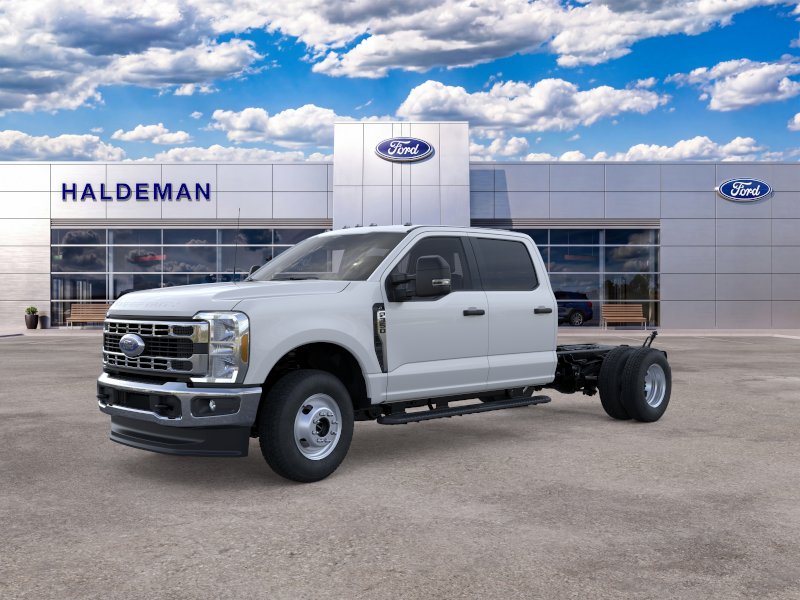
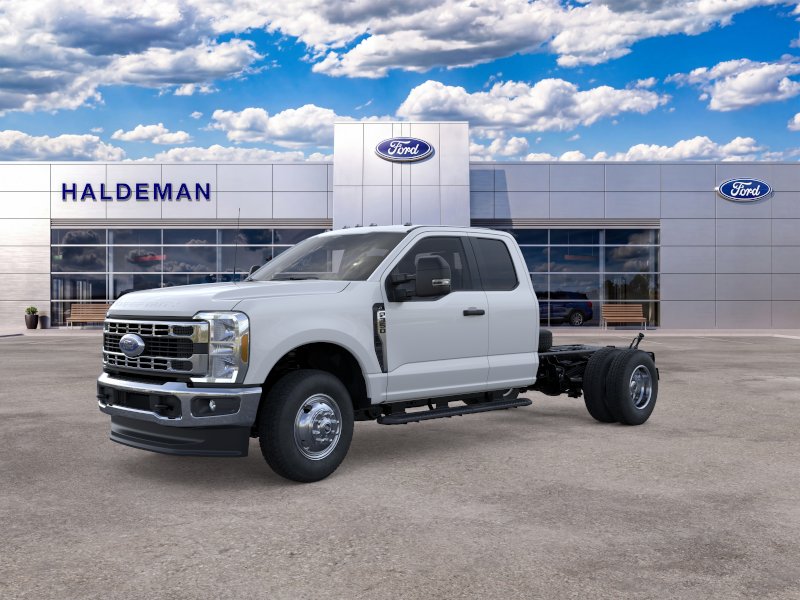
Regular cab, extended cab and crew cab duallys each suit a different kind of operation. A solo operator may favor a regular cab with a long bed, which leaves more clearance between the cab and the trailer nose on sharp turns, while teams and outfits that bring a helper usually choose the crew cab. Haldeman Ford can show which DRW configurations are on the lot and explain how a factory order works when none match.
The duals handle the steadying, while the load plan handles the rest. A well-secured deck behind a properly matched dually keeps a commercial run uneventful.
Planning the River Crossing Before the Load Goes On
Hauling between Trenton and the Pennsylvania side means crossing the Delaware, and not every bridge suits a heavy rig. Some older river bridges carry weight limits, and spans into Morrisville such as the Calhoun Street Bridge date from an era long before anyone pictured a loaded dually and gooseneck rolling across. Check posted limits and restrictions before the trailer is loaded, not at the approach with traffic stacking up behind you.
For loaded runs, commercial drivers generally plan around the larger crossings built for truck traffic, such as the toll bridge that carries US-1 over the river or the interstate spans farther up and down the valley. A truck-routing app that knows your combined weight and height helps, but read the posted signs anyway, since construction and temporary restrictions change faster than map data.
- Drivers who save a tested route for each regular customer across the river can promise delivery windows with confidence and skip the guesswork at every approach
- Height counts as much as weight, because tall cargo on a gooseneck can meet low clearances under rail lines and older overpasses close to the riverfront
- Rush-hour traffic on US-1 can stack up near the bridge approaches, so many hot-shot drivers cross early and wait near the delivery site until the customer opens
Writing a route down before the first load for a new customer sounds old-fashioned, yet it prevents the worst kind of surprise: a loaded rig facing a weight sign with no place to turn around. Dispatchers and owner-operators who cross toward Morrisville regularly often keep a short list of approved crossings tucked in the visor.
The river splits a great many commercial routes around Trenton. Choosing the crossing before the load is chained down is part of hauling responsibly with a dually.
Financing a Hauling Business and Trading the Tired Truck
Many hot-shot operators arrive in a single-rear-wheel truck that has worked near its limits for years. Haldeman Ford appraises it on how it drives and how it was kept, and the resulting figure can be applied to the dually in the same visit. High mileage is expected on a truck that hauled for a living, and a thorough maintenance file usually speaks louder than the odometer.
Our finance team works with business buyers and individual owners and explains lender terms clearly. If the truck will be titled to a company or used for paid hauling, say so at the start, so the paperwork and insurance requirements line up with the work it will do once it leaves the lot.
- Note the brand and condition of the gooseneck ball in your current bed, since some owners move that hardware across while others leave it with the trade
- Lenders that finance commercial use sometimes want proof of operating authority or recent hauling invoices, so ask ahead what to have ready for the appointment
- A trade with a cracked bed liner or a corroded trailer connector still appraises mainly on how it runs, so gather service receipts before worrying about cosmetic fixes
Some operators keep the old pickup as a backup for light runs while the dually takes the heavy loads. Others fold everything into one truck. Either plan can work, and our staff will lay out how each fits your schedule and the customers you serve.
A dually bought for paid hauling is a business tool first. Lining up the trade and the financing around that purpose keeps the first load on schedule.
Keeping a Working Dually Out of the Shop
Commercial loads wear a truck faster than occasional towing, so a dually that hauls most days usually follows the severe-duty schedule in the owner's guide. Brakes, rear axle fluid, hitch hardware and the trailer connector all take steady strain, and checking them on that tighter rhythm prevents a missed delivery. Our service team can help plan visits around your hauling calendar.
The service lane at Haldeman Ford can note your trailer type and typical cargo in your file, which helps technicians focus on the wear your work creates. Drivers who log heavy stop-and-go time on US-1 through the city tend to see brake wear sooner, and an inspection timed between big jobs catches it before a roadside officer does.
- Have the gooseneck ball, the chain loops and the bed mount checked for cracks at every visit, since a commercial load leans on those parts constantly
- Keep recent inspection and repair records in the cab, because officers checking a commercial rig may ask when the brakes and lights were last serviced
- Test the trailer lights and brake controller before the first run each week, because a dead marker lamp is an easy reason to get pulled over
A dually that hauls for a living rarely gets a quiet season, so book service during slower weeks whenever possible. Our advisors will tell you plainly which items need attention now and which can wait until after the next big contract.
Hauling commercial loads across the river comes down to a planted truck, a well-secured deck and a crossing chosen ahead of time. The F-350 DRW handles the first part, and careful planning covers the rest.
A commercial dually is only as good as the plan behind each load. With your routes and trailer details on the table, the people on the Haldeman Ford truck desk can match that hauling plan to F-350 DRW pickups with gooseneck prep in place.