New Ford Super Duty F-350 DRW for Sale Near Philadelphia, PA


Frequently Asked Questions about New Ford Super Duty F-350 DRW Philadelphia, PA
What kind of work actually justifies a dual rear wheel F-350?
Work where the truck starts loaded and stays loaded, week after week. Landscape, hardscape, tree work, and equipment moving are the common ones around Philadelphia. If the heavy days are occasional rather than daily, a single rear wheel truck will serve you better.
What do dual rear wheels actually change?
They spread weight across a wider stance, so a tall or heavy load stays settled and the truck reacts less to crosswind and uneven ground. The cost is width, which you notice in drive throughs, decks, and residential streets. It is a daily trade rather than a footnote.
Is maintenance different on a dually?
Only in one place, and it is the tires. Two of the six sit where you never look, which means a slow leak can run for weeks while the tire beside it quietly carries double. Put pressures on a calendar rather than trusting a walk around the truck.
Should my driver come to the dealership with me?
If somebody else drives the truck most days, yes. They will have views on mirrors, visibility, and storage that never come up in a showroom, and those are the things that matter at hour nine. Crews also look after equipment they helped choose.
How should a work dually be specified differently?
Put the money into the working end rather than the cabin. Bed and body configuration, hitch arrangement, and how the truck handles repeated loading matter far more across a decade than the interior does. Tell us how you load and we will pull the trucks set up for it.
Have Additional Questions?
Tell us what your crew hauls on a normal week and we can point you at the duallys already configured for it.
Bring whoever drives the truck. Their read on visibility and storage is worth more than ours.
Send a message with your trailer and load details and we will do the filtering before you arrive.
The Crews Around Philadelphia Running a Dually Every Day
Drive through the neighborhoods outside Philadelphia on a weekday morning and you pass a lot of dual rear wheel trucks with trailers behind them. Landscape crews, hardscape and masonry outfits, tree services, and equipment movers, all doing work that means putting several tons of material somewhere and then taking it away again.
The F-350 DRW exists for that pattern. Not for the occasional heavy weekend, but for a truck that starts loaded on Monday and stays loaded through Friday, week after week, with material going out and debris coming back.
- Material out in the morning and debris back in the afternoon
- A trailer attached most days rather than a few times a year
- Loads that are heavy, tall, and awkward rather than neat
That is a genuinely different duty cycle than a truck pulling a camper twice a summer. It changes what you should buy and how you should look after it once you own it.
If your truck is a piece of equipment rather than a vehicle, you are reading the right page. Everything below assumes as much.
Reading a Dually Built for Daily Material Work
Duallys aimed at daily material work tend to be specified quite differently from ones bought for recreational towing. Bed and body configuration, the hitch arrangement, and how the truck is set up for repeated loading all matter more than the interior does.
It pays to be blunt about priorities here. A truck that will carry mulch, stone, and equipment for a decade does not need the nicest cabin in the row, and that money usually does more good at the working end.
- Bed and body configuration matched to how you load
- Hitch arrangement suited to the trailer you pull daily
- Interior chosen for durability rather than for appearance
Haldeman Ford can pull the trucks set up for working duty rather than walking you past everything wearing the same badge. It makes for a shorter and considerably more useful conversation.
Specify the working end first. The cabin is the part you can compromise on without regretting it later.
The Person Who Drives It Might Not Be You
A truck bought for a crew is not really bought for you. Somebody else will drive it most days, load it, reverse it into places you would not attempt, and live with whatever you decided about mirrors and visibility.
So bring them along, or at minimum ask them first. Whoever spends nine hours a day in that seat has opinions about the things that turn out to matter, and they are usually more practical than the ones raised in a showroom.
- Your regular driver in the seat before the purchase, not after
- Visibility judged by the person who reverses it every day
- Controls and storage checked by whoever actually uses them
It also helps with the part nobody plans for, which is whether your crew looks after a truck they had no say in. People take better care of equipment they helped choose.
Buying a work truck without the operator in the room is how you end up with one nobody likes. Asking them first costs nothing.
Why Four Wheels at the Back Change the Load
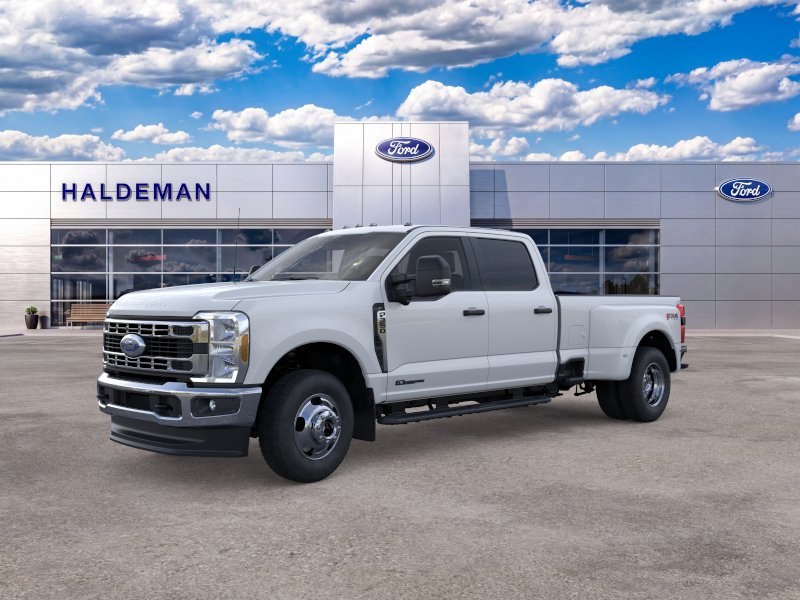
Dual rear wheels change how a loaded truck behaves rather than simply what it can carry. The extra footprint spreads weight across a wider stance, and the practical result is a truck that stays settled when the load is high or the trailer is catching wind.
That matters most on the days that go sideways. Crosswind on an open stretch, a lane change you did not plan, an uneven surface at a site entrance, and a dually simply does not react the way a single wheel truck does under the same weight.
- A wider stance that keeps a tall load settled
- Less reaction to crosswind with something big behind you
- Confidence on uneven ground at a site entrance
The cost is width. A dually is wider than you expect in a drive through, a parking deck, and a residential street, and that is a real daily trade rather than a footnote.
If your loads run consistently heavy and tall, the stability earns the width back. If they do not, the single wheel version will make your life easier.
Six Tires Is Not Twice the Work, It Is a Different Job
Six tires is the maintenance fact nobody mentions until you own one. It is not simply twice the tire budget, it is a different habit, because the inner duals are the ones you cannot see and therefore the ones you forget.
An inner tire quietly losing pressure is the classic dually failure. It carries on looking fine from the outside while the outer tire takes the whole load, and by the time anybody notices you have two problems rather than one.
- Inner dual pressures checked on a schedule, not by eye
- Rotation planned across six positions rather than four
- Valve stem extensions kept in usable condition
Our service department checks all six as a matter of course, which sounds obvious and is exactly what gets skipped at a quick stop. Haldeman Ford can put it on a rhythm that matches how hard the truck works.
Duallys are not high maintenance trucks. They are trucks with one maintenance item most owners genuinely do not know about.
Tell Haldeman Ford what your crew hauls in a normal week and bring the driver along, and we will show you the duallys already set up for that work.