New Ford Super Duty F-350 SRW for Sale Near Philadelphia, PA


Frequently Asked Questions about New Ford Super Duty F-350 SRW Philadelphia, PA
Why choose single rear wheels on a one ton truck?
Because on most trade jobs the thing stopping you is the entrance, not the weight. A one ton truck you can put where the work is beats a wider one parked on the street while everything gets carried in. You give up some stability under the tallest loads, which for this kind of work is rarely the binding constraint.
How do I keep a work truck from costing me a day?
Schedule service around your week instead of waiting for something to fail, and replace wear items on a plan rather than on the day they strand you. Our service department can work with your calendar rather than against it. A planned Tuesday is far cheaper than an unplanned Thursday.
What should I measure before buying a work truck?
The narrowest access point you use regularly, any overhead clearance where you park or load, and the turning room at your own yard. Bring those figures and we can say plainly whether a configuration clears them. Five minutes now saves a great deal of frustration later.
Are F-350 SRW trucks configured very differently from each other?
Enormously, and two trucks wearing the same badge can be built for completely unrelated jobs. Fix what goes on the back first, because a truck bought before that decision often turns out to be the wrong foundation. Tell us the plan and the shortlist gets very short.
I work in older parts of the city. Does that change what I should buy?
Substantially. Much of this region predates the vehicles now being asked to work in it, and an entrance built for a cart does not care what you can carry. The people who learn this the hard way tend to learn it while reversing out of somewhere with an audience.
Have Additional Questions?
Send us the measurements from the tightest spot on your route and we will tell you which setups clear it.
Planning to add a body or a rack? Say so up front and the shortlist we pull will be a much shorter one.
Our service team can map out a maintenance schedule that fits your working week before you ever buy.
A Work Truck Off the Road Is a Day You Do Not Get Back
For a one person operation or a small crew, the truck being unavailable is not an inconvenience, it is lost revenue. That changes how you should think about maintenance, because the goal stops being cheap service and becomes predictable service.
In practice that means scheduling around your work rather than around ours. Early drop offs, planned work instead of reactive work, and wear items replaced on a date you choose rather than the day they quit on you.
- Service scheduled around your working week, not squeezed into it
- Wear items replaced before they strand you rather than after
- One shop holding the history so nothing gets rediscovered twice
Talk to the service department at Haldeman Ford about how your week runs and they can work with it. A truck that goes in on a planned Tuesday costs you far less than one that stops on an unplanned Thursday.
Uptime is the thing you are genuinely buying with a work truck. Nearly everything else is negotiable.
One Ton Capability in Something You Can Still Place
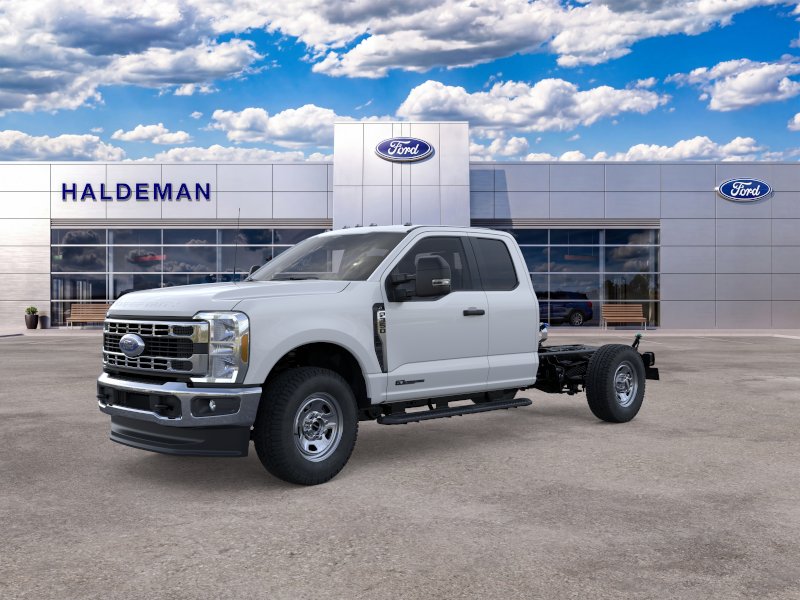
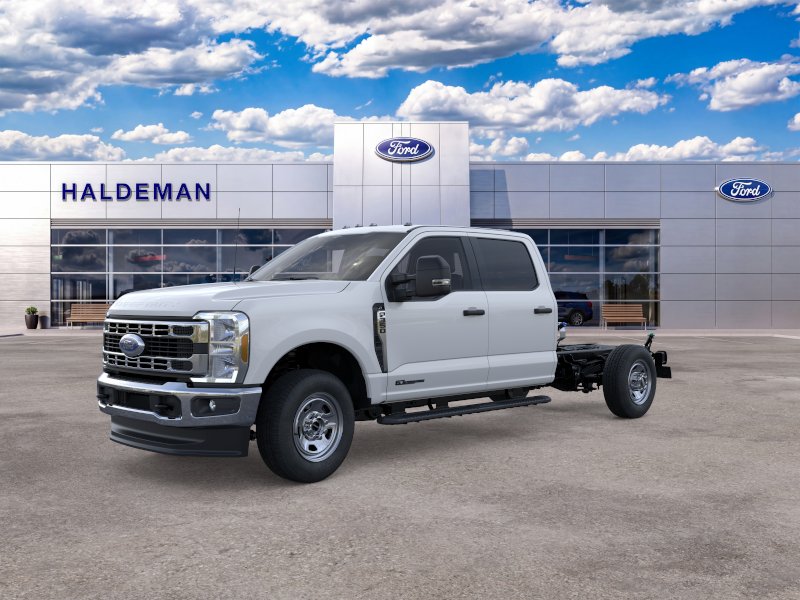
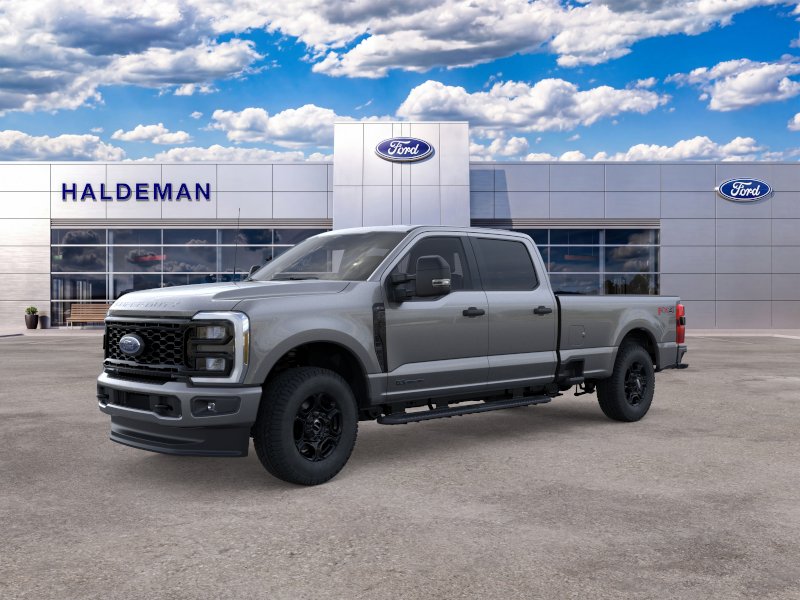
The single rear wheel F-350 is a strange and useful animal. It carries the heavy duty underpinnings of a one ton truck in a body you can still park, reverse down an alley, and take into a residential driveway without drawing a crowd.
That combination is why so many service trades land here rather than a step lighter or a step heavier. The capability is genuine, and the truck does not turn into a logistics problem every time the job sits somewhere tight.
- Heavy duty underpinnings in a width you can still place
- Reverses into a residential driveway without a spotter
- Reaches the working end of a job a dually cannot get to
You give up some stability under the heaviest and tallest loads compared with a dually. For most service and trade work that trade is worth making, because access is the constraint far more often than stability is.
Capability you cannot get to the job is not capability. This truck is built around that observation.
Finding a Setup That Matches How You Actually Work
F-350 SRW trucks turn up configured for very different lives. Some arrive set up as service bodies, some are plain beds waiting for a rack, and some are essentially heavy duty family trucks with a hitch.
Knowing which of those you are looking at saves an enormous amount of time. Describe the shape of your work and Haldeman Ford can skip the two thirds of the inventory that was never going to suit you.
- Bed configuration matched to the rack or body you plan to add
- Cab size chosen around crew size rather than around comfort
- Equipment that supports the tools you carry every day
Settle the body or rack question early, because it changes which trucks are worth looking at in the first place. Working that out afterward gets expensive.
The right truck for your work is usually a small subset of what is on the lot. Narrowing it is most of the job.
Measure the Places the Truck Has to Fit
Here is the check almost nobody does and everybody should. Before you buy, measure the three or four tightest places the truck has to reach on a regular basis, then hold those against the truck rather than guessing.
Gated driveways, alley entrances, low openings at older commercial buildings, and the parking situation at your own yard. Any one of them becoming a daily problem will sour a truck you otherwise like.
- The narrowest regular access point on your route, measured
- Overhead clearance anywhere you park or load routinely
- Turning room at your own yard or shop
Bring the figures and we can tell you plainly whether a given configuration will clear them. It takes five minutes and it heads off the most expensive kind of second guessing.
A tape measure is an underrated shopping tool for a work truck. Use it before you sign rather than afterward.
Old Streets, Alleys, and Gated Driveways
Trade work around Philadelphia regularly happens in places laid out long before anybody was driving trucks through them. Alleys behind rowhouses, driveways with gateposts, older commercial buildings with tight loading areas, none of it planned with a one ton truck in mind.
That reality is why the single rear wheel version keeps winning here. Contractors who tried a dually and came back describe the same thing, which is that the capability was fine and the access was not, and access decides whether you can take the job at all.
- Alleys and rear access a wider truck simply cannot use
- Gateposts and driveway entrances with no margin either side
- Older loading areas never sized for heavy duty trucks
If your work takes you into the older parts of the Philadelphia area regularly, weigh that before buying on capability alone. The truck you can get to the job beats the truck that is theoretically stronger.
Turning down work because your truck does not fit is a costly way to learn you bought the wrong one. That is the whole case for this configuration.
Bring the measurements from the tightest spots on your route to Haldeman Ford and we will work out which F-350 SRW setups clear them.