New Ford Super Duty F-450 DRW for Sale in Trenton, NJ


Frequently Asked Questions About New Ford Super Duty F-450 DRW in Trenton, NJ
Can a welding rig go in the bed of an F-450 pickup, or does it need a service body?
Both setups work, and storage usually decides it. A skid in the dually bed leaves the welder open to weather unless it is covered, while a service body keeps bottles, reels and leads locked away overnight, which matters for trucks parked on the street or at an open site.
How should gas bottles be carried on a mobile welding truck?
Upright and secured with straps or chains in a rack built for them, with protective caps on whenever the bottles are not connected. Many crews keep oxygen and fuel gas apart on the body as well. Your gas supplier and your job-site safety rules have the final word on storage details.
Can an F-450 tow an equipment trailer while carrying a loaded service body?
Often it can, but the combined weight of the truck, the body, the tools and the trailer has to stay within Ford ratings for that specific build. Those ratings get checked against your body plan and trailer before you order.
Will a fully built workshop truck change what license my crew needs?
It can, because licensing rules look at the weight rating of the truck and any trailer behind it, and sometimes at what it carries. The New Jersey Motor Vehicle Commission sets those requirements, so confirm with the agency for your exact build before assigning drivers.
What should a contractor check before ordering a service body for bridge and river jobs?
Ask about corrosion protection, because damp river air and winter road salt both attack bare steel compartments. Confirm too that the crane and its outriggers can work from a narrow shoulder, and that the body has a dedicated spot for cones and signs away from the welding gear.
Have Additional Questions?
Start with the heaviest machine that rides along, whether a welder, a compressor or a crane on the body, and where it sits on your current truck.
A photo of that truck with every compartment door open shows our commercial staff more about the build you need than a long list of features.
Mention any trailer that follows the truck to the job, from a light tower to a small excavator, so the hitch is part of the plan from the start.
A Rolling Workshop on a Heavy Chassis
Some trucks haul material to a job. Others carry the entire repair shop along, and that second kind is what many F-450 buyers in Trenton have in mind. A welding contractor, a millwright or a field mechanic needs the machine, the gas bottles, the vise and every hand tool to arrive together, ready to work the moment the truck stops beside a cracked railing or a seized valve.
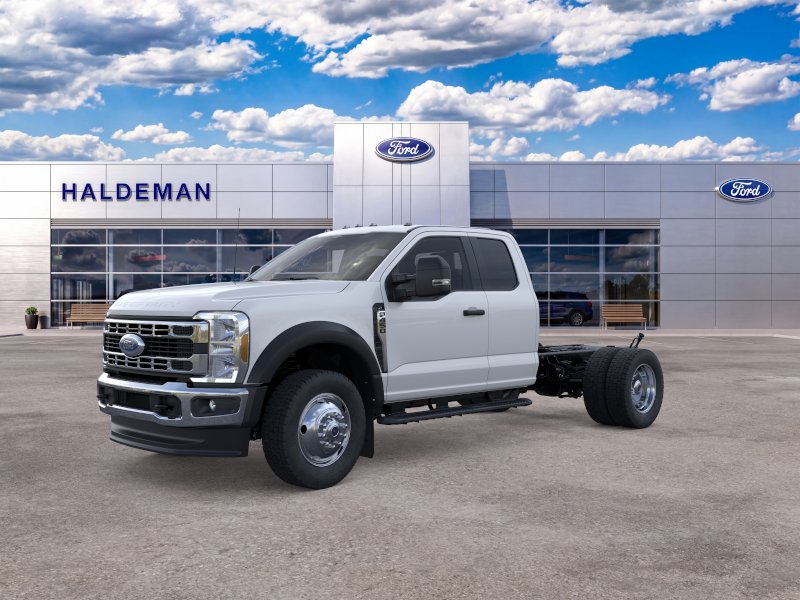
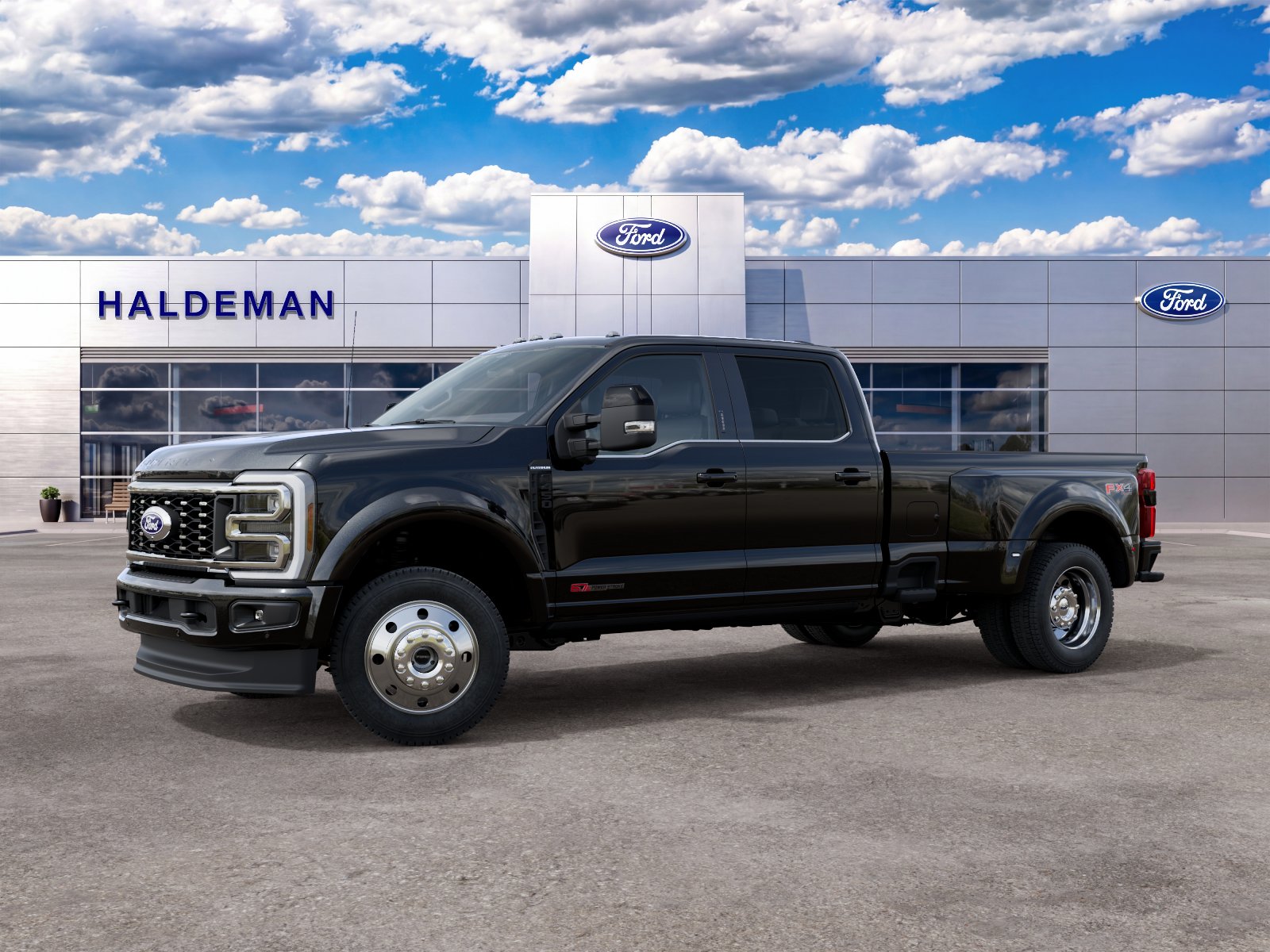
Ford offers the F-450 both as a dually pickup and as a chassis cab waiting for a body. A welding skid bolted into the pickup bed suits a one-person repair business, while that same chassis wearing a heavy service body gives a crew locked compartments, a flat work surface and, when the equipment calls for it, a small crane on the rear corner of the body.
- A welder skid mounted just ahead of the rear axle keeps the heaviest machine near the middle of the truck, which settles the ride over broken pavement
- Compressed gas bottles travel upright in a rack with their own straps, away from the cab and the welding leads, a detail site safety officers often check first
- Hose reels and lead reels fixed to the body spare the crew from coiling and uncoiling heavy lines at every stop through a long working day
Weight adds up fast on a truck like this. A steel body, a welding machine, full bottles, bins of fittings and boxes of rod can approach what the chassis is rated to carry before anyone climbs aboard. Adding up the planned equipment on paper first, then weighing the finished truck on a certified scale after the upfit, keeps a mobile shop legal and steady.
The F-450 makes sense once the tools outgrow a lighter truck and the work keeps moving between sites. Start with what the shop must carry, and the build takes shape around it.
Laying Out Compartments, Racks and the Bench
A well-planned service body puts every tool where a hand naturally reaches for it. Consumables such as rod, wire and grinding discs go in shallow drawers on the curb side, heavy jacks and pullers ride low over the axle, and the welder sits where its leads can reach both sides of the truck without dragging through mud.
Inventory of F-450 work trucks at Haldeman Ford shifts as units arrive and sell, and a heavy service body is often ordered to suit one crew and its tools. Our commercial staff can check what is on hand, what is already on its way to us and what it takes to have an upfitter finish a chassis to your own layout.
- Sketching the compartment plan on paper, one door at a time, shows quickly whether the crane, the welder and the air tank can all share one body
- Lights inside each compartment matter for crews called out after dark, so ask the body builder about them before the drawings are signed off
- A ladder rack above the body keeps long stock such as pipe and angle iron off the work surface and leaves the top clear of loose gear
Crews who share one truck across shifts do well with labeled drawers and a written tool list taped inside each door. When something goes missing, the gap shows at the end of the day, not halfway through a repair on a bridge deck. That habit also protects the tools themselves, which on a fully equipped body can be worth nearly as much as the truck.
Layout decides how quickly a crew gets to work once the truck parks. Plan the body around the tools, and plan the tools around the people who use them.
Bridge and Riverfront Jobs Along the Delaware River
Plenty of repair work around Trenton happens close to the water. Bridges, retaining walls, pump stations and stormwater outfalls along the Delaware River all need welders and fitters who can reach them with a full kit. An F-450 working the riverfront might spend its morning on a railing repair and its afternoon at a pump house, carrying everything both jobs require.
River work brings its own ground conditions. Access lanes down to the water are often gravel or packed dirt, so a heavy truck parked on soft ground needs its weight spread well and its crane outriggers set on pads before anything is lifted. Work on public structures also tends to run on tight permitted hours, which rewards a truck that is stocked before it leaves the yard.
- Posted limits on a few of the older crossings into Pennsylvania mean a fully loaded workshop truck should have its route planned before the crew rolls out
- Bridge maintenance often runs inside short permitted work windows, so a truck that arrives fully stocked avoids losing a window to fetch a forgotten part
- Fitters replacing valves at riverside pump stations appreciate a body crane that can swing a heavy fitting straight from the compartment down into the pit
Equipment towed behind the truck matters too. Many crews pull a trailer carrying a light tower, a larger compressor or a small excavator for trench work, and an F-450 can often tow that trailer with the body loaded, provided the whole combination stays inside what Ford rates that build to handle. Our staff will look at the body and the trailer together so nothing gets guessed at the curb.
Infrastructure work along the river rarely waits for a truck to become available. A workshop F-450 that carries the whole kit keeps those repairs on schedule.
Financing a Repair Business on Wheels
A rolling workshop is usually bought by a company, and lenders study that company when they review the application. Fabrication shops and repair contractors working out of the industrial parks around Trenton often finance the chassis and the body together, so one loan stands behind the finished truck. Haldeman Ford will outline the commercial financing process and the papers a lender asks for.
Trading in the old service truck raises a practical question: does the equipment move over? A welder, a crane or a set of drawers with plenty of life left can often come off before the appraisal and be remounted on the new body by the upfitter, while worn compartments and a rusted bed usually stay with the trade.
- List the tools and machines you plan to keep before the appraisal, so the offer covers only the truck and body that are actually leaving with us
- Contractors bidding public infrastructure work may need proof of coverage on the new truck before it enters a site, so line that up before delivery
- A business adding a second rolling workshop can copy the first truck's layout, so any crew member finds the same drill in the same drawer on either one
Some owners finance through a lender we work with, while others arrive with approval from their own bank or credit union. Either path leads to the same truck. Ask our finance office how a separately built body is handled in the loan documents, since the timing between chassis delivery and the upfit can shape when each document gets signed.
Paying for a workshop truck is closer to buying shop equipment than buying a vehicle. Treat the decision that way and the right questions come naturally.
Upkeep for a Truck That Carries the Whole Shop
When the truck is the shop, a breakdown stops two things at once: the travel and the repair work it was headed to do. Haldeman Ford can schedule chassis maintenance around your job calendar, including early drop-offs before a crew heads out in a spare vehicle. Telling the advisor what the body carries helps our technicians check the right places first.
Heavy bodies work the frame, the mounts and the suspension harder than an empty pickup ever will. Body mounting bolts, spring hangers and brake parts all deserve attention at each visit, and a rinse underneath after muddy riverbank jobs keeps grit out of the places that wear. Hinges, latches and drawer slides on the body usually go back to its builder, while the chassis stays with us.
- Welders and compressors follow their own maintenance schedules, so log their service hours in the same notebook as the truck's oil changes and tire checks
- Grease the body crane's rotation point and check its hoses on the crane maker's schedule, since a seized joint or weeping fitting can idle a crew
- When booking a longer repair, ask whether a loaner or rental can be arranged so the crew can move its most-used tools for the day
A simple record for each truck, listing the date, the work done and the hours on any mounted equipment, helps spot a pattern before it turns into a failure on site. Our technicians can add their notes to that record at each visit, and a complete file makes the truck easier to sell or trade when its working life winds down.
A rolling workshop does its job only when it reaches the work with every tool aboard. Keep the F-450 maintained with that purpose in mind and it remains the shop your crew counts on.
Every mobile workshop starts as a list of tools looking for a truck. Share yours with Haldeman Ford, and our commercial staff will sketch an F-450 build that carries it all to the job.