New Ford Super Duty F-550 DRW for Sale in Trenton, NJ



Frequently Asked Questions About New Ford Super Duty F-550 DRW in Trenton, NJ
Can the F-550 carry an insulated bucket for work near overhead lines?
Insulated aerial devices are commonly mounted on F-550 chassis cabs by aerial body builders. The insulation rating, testing schedule and approved uses come from the boom maker, so confirm those with the builder for the work your crew performs.
What is a forestry body, and does a tree crew need one?
A forestry body pairs an aerial lift with an enclosed chip box, so a crew can trim, chip and haul away debris with one truck. Crews that mostly prune and leave the wood on site often skip the chip box in favor of a flatbed or a utility body.
Does a crane body call for a different chassis order than a service body?
Usually, yes, because a crane concentrates weight at one corner and pushes strong forces into the frame each time it lifts. The crane maker may call for frame reinforcement, particular outriggers and a power take-off, and each of those changes the chassis order.
Do crews need training before operating a new aerial device?
Aerial device operators generally need training on the specific unit, and many employers require a familiarization session on each new truck before it goes into service. The boom maker or body builder usually supplies operating instructions and can often arrange a walkthrough at delivery, so ask about it when the order is placed.
What should a tree service decide before ordering a bucket truck chassis?
Settle the working height you need, whether the crew trims near lines, how wide the typical driveway is and whether a chipper trails behind. Those answers decide most of the chassis choices before the body builder starts drawing.
Have Additional Questions?
Name the job first: trimming along overhead lines, lifting pumps into pits, setting signs or clearing storm damage from yards.
Add the height or reach the work demands and the ground the truck sets up on, from a paved street to a soft backyard lawn.
Those details let our commercial staff narrow the lifting bodies worth discussing and point you toward builders who already make them.
Aerial Lifts and Bucket Bodies on the F-550
Tree crews and utility contractors in Trenton put a worker in the air nearly every day, and the truck under that bucket has to stay planted while the boom reaches over a roof or out across a street. Aerial bodies very often ride on an F-550 chassis cab, because the chassis is rated to carry a boom, a bucket, outriggers and tool storage on one frame.
Line clearance crews trim branches away from overhead wires, arborists take down storm-damaged trees, and sign contractors reach poles beside busy intersections. Each of those jobs asks something different of the aerial body: working height, side reach, whether the bucket needs insulation from nearby lines and how much the platform must hold with a worker and tools aboard.
- Insulated booms built for work near overhead lines carry their own testing schedule, so ask the body builder how often the boom and bucket liner need recertifying
- Platform rotation and side reach decide whether a crew can work over a sidewalk and a fence from the street without repositioning the truck twice
- Telescopic and articulating booms fold differently for travel, so the height of the truck at rest matters for low branches, carports and the doors back at the yard
Most aerial bodies use outriggers that lower to the ground before the boom rises, and the truck must sit close to level for them to work as designed. A chassis with the right frame length and suspension gives those outriggers a solid base, and the body builder confirms the match against Ford body builder guidance before mounting anything.
A worker in a bucket is trusting the truck beneath it. That trust gets built into the order sheet long before the boom ever leaves its cradle.
Small Cranes and Other Lifting Bodies
Not every lifting truck carries a person. Sign installers, pump service crews and steel erectors often need a small knuckle or telescoping crane on a utility body, swinging heavy parts off the truck and onto a footing or down into a pit. An F-550 wearing a crane body sets up much like a bucket truck, with outriggers and a level stance, but it lifts loads in place of people.
Crane bodies raise different questions than aerial lifts. A crane can lift far less at full reach than it can close to its base, so the body builder works out how far out the heaviest typical part will travel. That answer shapes where the crane mounts, what reinforcement the frame needs and how the body balances the load during the lift.
- Remote pendant controls let the operator stand clear of the load and watch it land, which many crane crews prefer on cramped urban job sites
- A crane body with its own compartment for rigging, slings and shackles keeps that gear dry, easy to inspect and close to the hook when it is needed
- Crane operators may need specific training or certification depending on the work and the size of the crane, so ask your safety advisor what applies before delivery
Stock F-550 trucks with lifting bodies already mounted do turn up, but most crane and aerial trucks are ordered for one particular crew. Haldeman Ford can check current inventory and incoming units, then help you judge whether a truck on hand comes close enough or whether a fresh order fits the work better.
A crane or a bucket turns a chassis into a tool with one very specific purpose. Matching the lift to the work is what makes the whole truck useful.
Storm Cleanup and Pruning Around Hopewell and Pennington
Hopewell and Pennington have mature shade trees along older streets and wooded lots beside their back roads, and a strong storm leaves limbs hanging on wires and trunks lying across driveways. Tree services working those towns keep bucket trucks moving from cleanup to cleanup in the days after high winds, while routine pruning fills the calendar between storms.
Residential tree work asks a lot of a chassis. Driveways are narrow, lawns are soft and the trees most in need of trimming often stand right beside the house. An F-550 with a compact aerial body and a shorter wheelbase can set up where a larger truck would rut the yard, with the chipper trailing behind on a hitch.
- Wood chips pile up fast during storm cleanup, so ask whether the chip box dumps from a control at the cab or needs someone at the rear
- Plywood or composite ground mats under the outriggers protect lawns and driveways, and they keep the truck level on ground still soggy from the storm
- Arborists who climb as well as work from the bucket can keep ropes, saddles and saws in a lockable compartment beside the boom
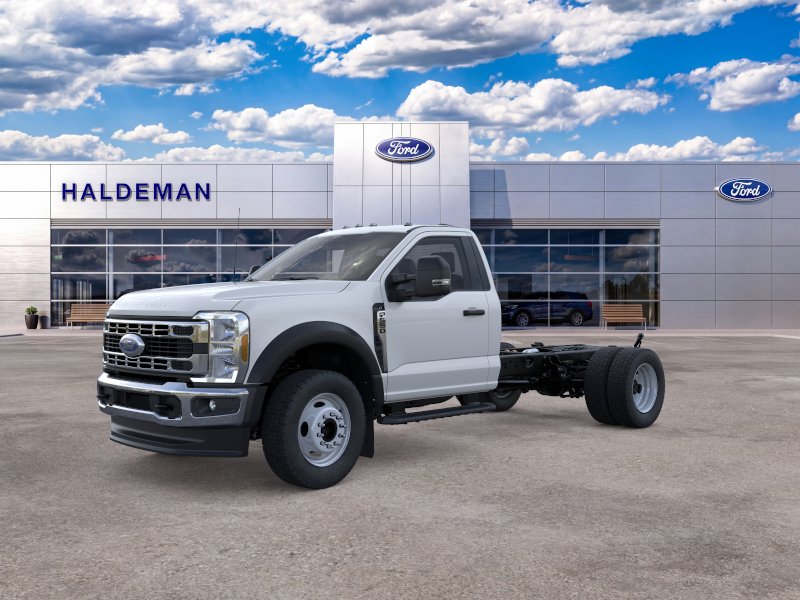
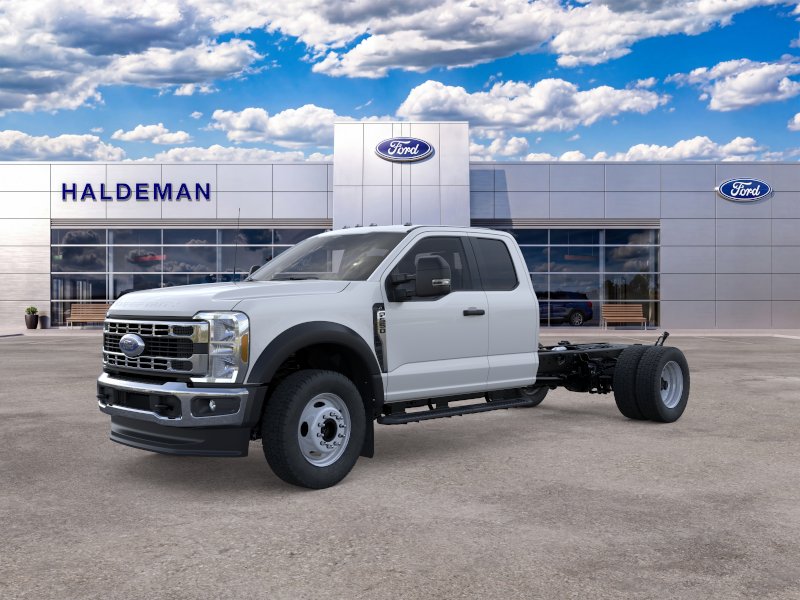
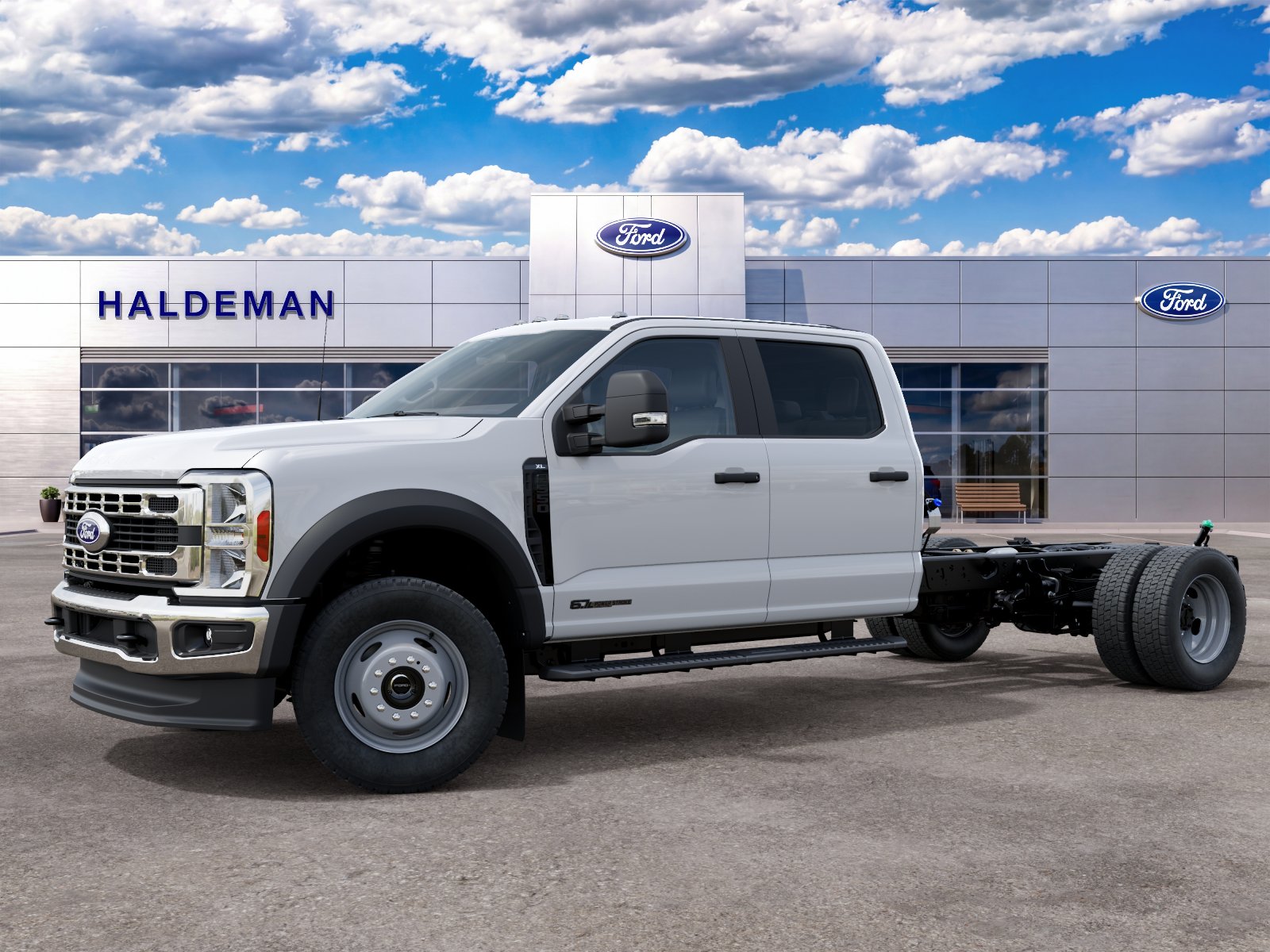
Storm response also means long days. A cab with room for the crew and their gear, good lighting for work into the evening and a dependable start on frosty mornings matter as much as the boom itself. Crew cab and regular cab chassis options can be shown next to each other so the crew size settles that choice.
Storm seasons in Hopewell and Pennington keep tree crews busy. A chassis built around that work has them ready the moment the phone rings.
Writing the Chassis Order Around the Lift
Every vocational body arrives with a list of chassis requirements, and the order has to match it line for line. The body builder will name a cab-to-axle length, a wheelbase, a cab style and any frame reinforcement the boom or crane needs. Ford publishes body builder guidance for its Super Duty chassis cabs, and upfitters lean on it to confirm a body fits before the truck is built.
Hydraulic power is the other large decision. Most aerial and crane bodies run their hydraulics through a power take-off, which needs to be chosen when the chassis is ordered. Upfitter switches in the cab, along with the wiring that feeds them, also belong on that first order, because adding them later eats time at the body shop.
- One shared document listing every chassis requirement, signed off by the body builder, prevents the classic surprise of a frame that turns out slightly short
- Where the boom pedestal sits on the frame shifts weight between the front and rear axles, so the body builder balances that before the order is final
- Amber warning lights and work lights aimed at the boom base are common on aerial trucks, and fitting them during the upfit keeps the cab tidy
Timing matters as much as the spec itself. Chassis and aerial bodies each carry their own lead times, and a truck that reaches the upfitter during a busy stretch may wait its turn. Our staff will give a current estimate for the chassis and help coordinate the handoff to whichever builder you choose.
Getting chassis details right on paper is far easier than correcting them once the boom is mounted. That paperwork is where a dependable lifting truck begins.
Financing, Trade-Ins and Upkeep for Lifting Trucks
Aerial and crane trucks are usually bought by companies, and lenders look at the business along with the finished truck. Haldeman Ford can explain how commercial financing works for a chassis whose body comes from a separate builder, and which documents speed the review. An older bucket truck can go toward the new one, with its boom and body appraised as part of the whole truck.
Service splits between two kinds of shop. Our Ford technicians care for the chassis, from brakes and steering to scheduled maintenance, while the boom, its hydraulics and the periodic aerial inspections usually go to the body builder or a qualified aerial service provider. Booking both in the same week keeps the truck out of action only once.
- Keep the aerial device inspection records in the truck, since a site safety officer or a utility client may ask to see them before work begins
- A drip under the boom pedestal after the truck sits overnight should be reported to the boom's builder right away, before a small seal grounds the truck
- Grease points on the turntable and boom joints follow the body builder's schedule, and crews who log each greasing catch a missed interval quickly
A bucket truck that goes down in the middle of a storm response leaves a crew standing on the ground. Booking routine chassis service in the quieter weeks between storm seasons keeps the truck ready when calls start coming in. Mention at drop-off how many hours the boom has run since the last visit, because stationary work wears a chassis in ways the odometer never shows.
The F-550 beneath a boom does quiet, steady work, holding a person or a heavy part still in the air. Specify it, finance it and maintain it with that lift in mind, and it keeps lifting season after season.
A bucket or crane truck is only as steady as the chassis under it. Our commercial staff at Haldeman Ford can work from the job, the reach and the crew size to specify an F-550 built around that lift.