New Ford Super Duty F-600 DRW for Sale in Trenton, NJ

Frequently Asked Questions About New Ford Super Duty F-600 DRW in Trenton, NJ
Can an F-600 carry a plow, a spreader and a full dump body at the same time?
Many are built that way, but the combined weight of plow, spreader, body and material must fit inside the rating Ford publishes for that build. The body builder works out the loaded weight on each axle before the truck is ordered, and that calculation settles the configuration.
Should a town choose an under-tailgate spreader or a V-box insert?
An under-tailgate spreader leaves the dump body open for hauling all year, while a V-box insert holds more material per load but has to be lifted out when winter ends. Fleets with long rural routes often lean toward the V-box, and town fleets that haul year round often prefer the tailgate unit.
Can a private snow contractor buy the same plow-ready F-600 a town uses?
Yes, the chassis and the plow equipment are sold to private buyers as well as public fleets. Contractors often choose a slightly different setup, such as a smaller spreader for parking lots, because their routes look nothing like a county road.
Which licensing questions should a town settle before hiring winter plow drivers?
Licensing for plow trucks can hinge on the weight rating of the loaded truck, any towed equipment and the materials aboard, so the answer differs from fleet to fleet. Settle it with your insurer and the New Jersey Motor Vehicle Commission before the first storm, then keep each driver's status in the personnel file.
How early should a road department order an F-600 to have it plowing by winter?
Many fleets start in the spring or earlier, since the bid itself, the chassis and the upfit each take time. Our staff can give a current estimate for the build you want, and that estimate is a sound starting point for the bid calendar.
Have Additional Questions?
Describe a typical storm for this truck: the roads it clears, how long its shift runs and what it spreads behind it.
Then describe its summer, whether that means hauling patch, collecting brush or sitting parked until the next winter arrives.
A truck that works both seasons is built differently from one that waits for snow, and those two pictures shape every choice on the order.
Plow, Spreader and Dump Body on One Chassis
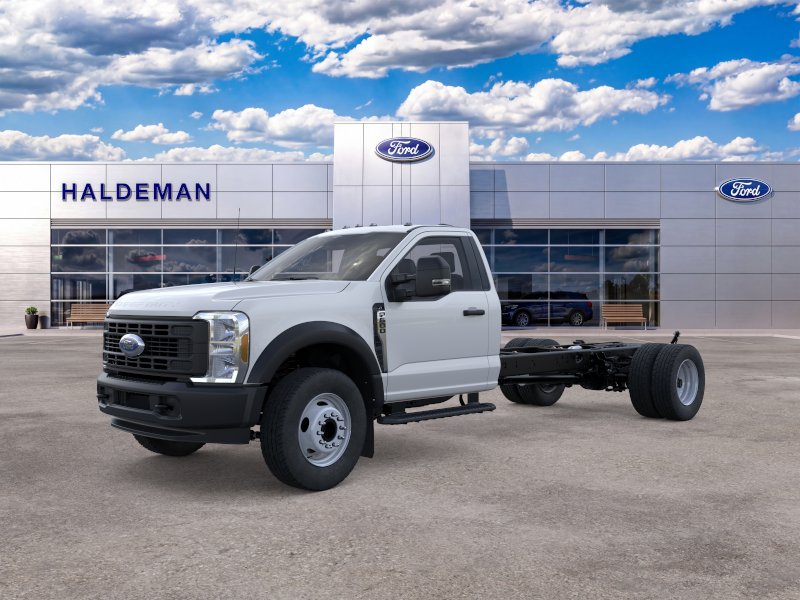
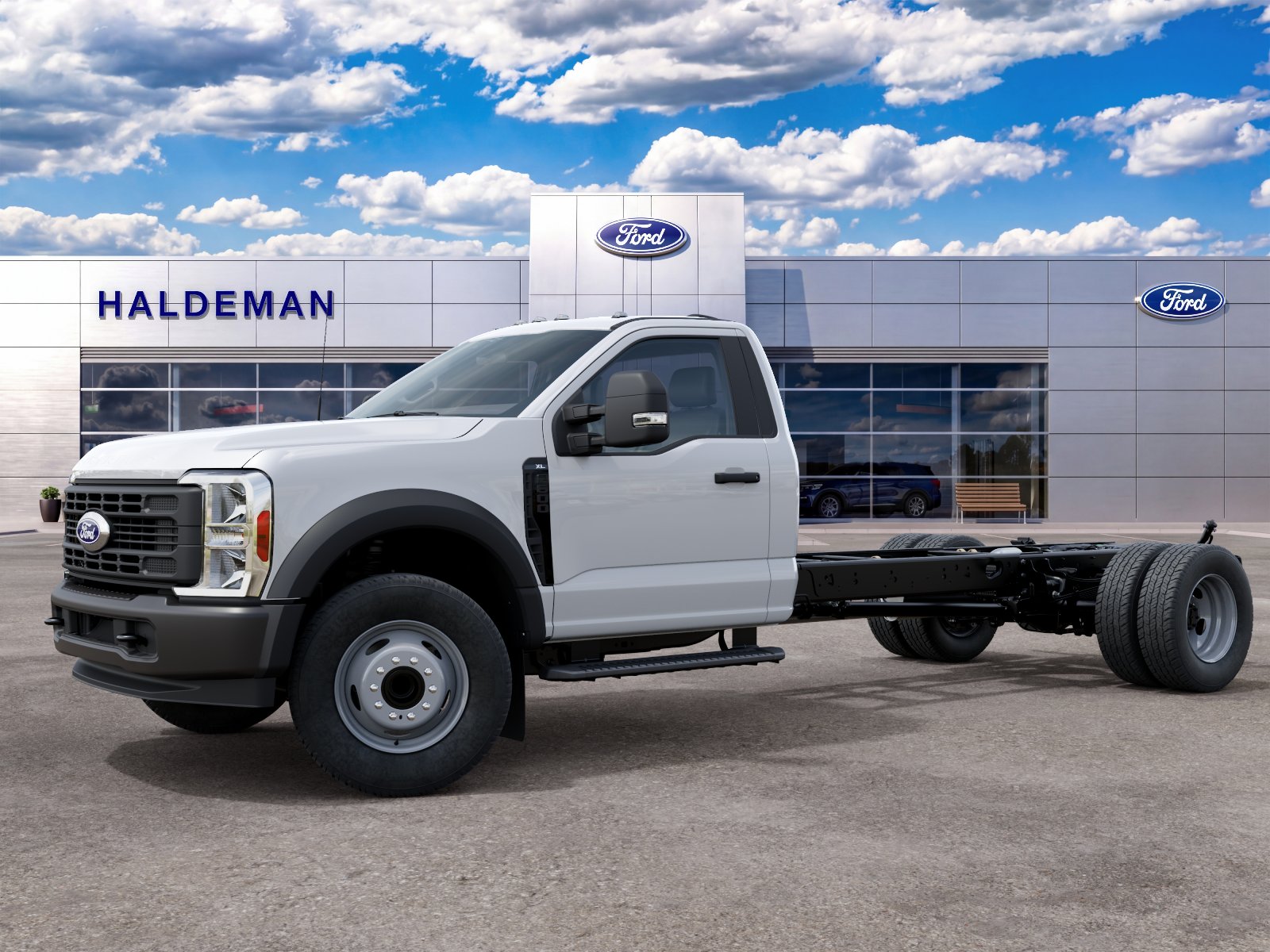
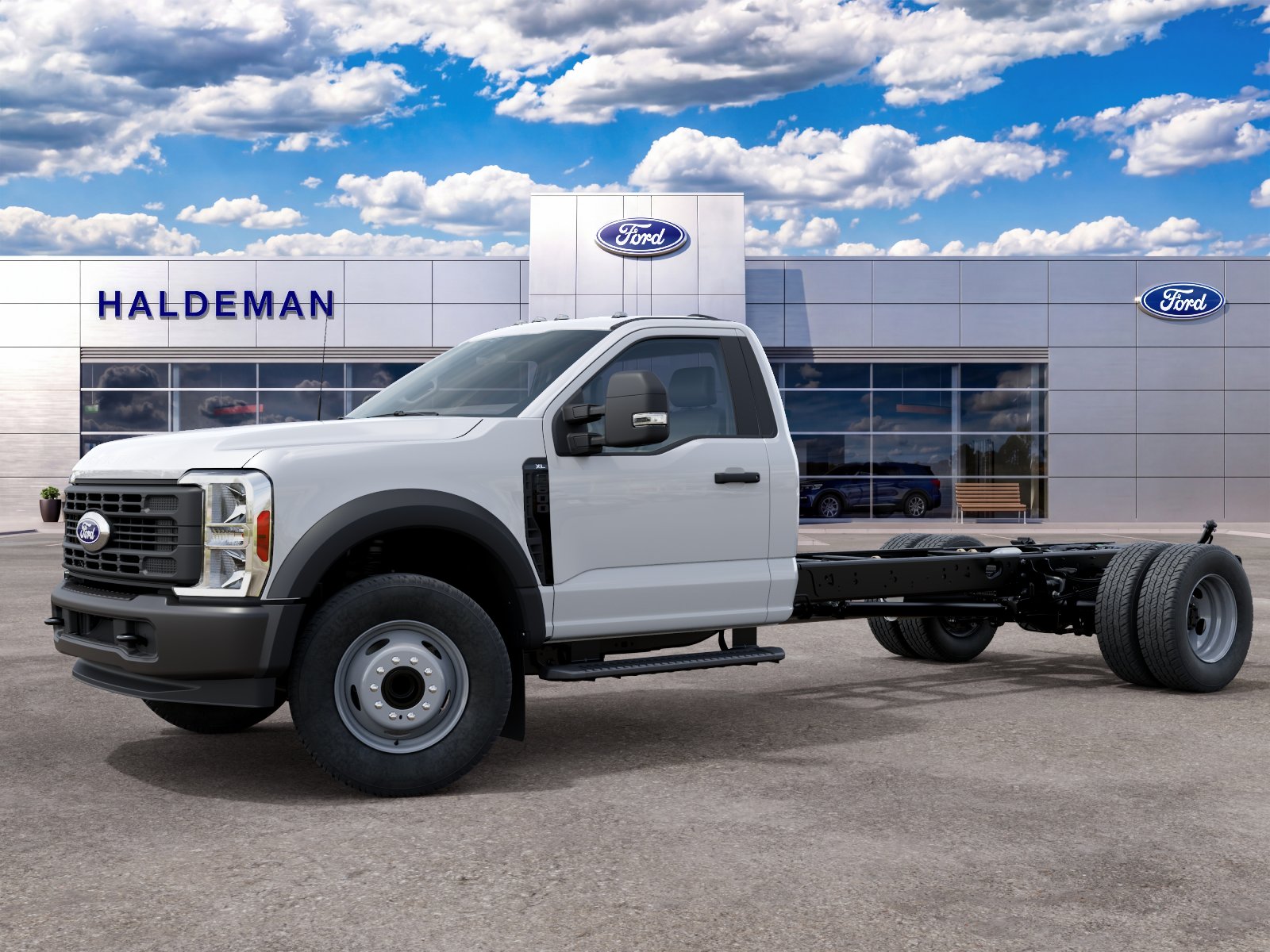
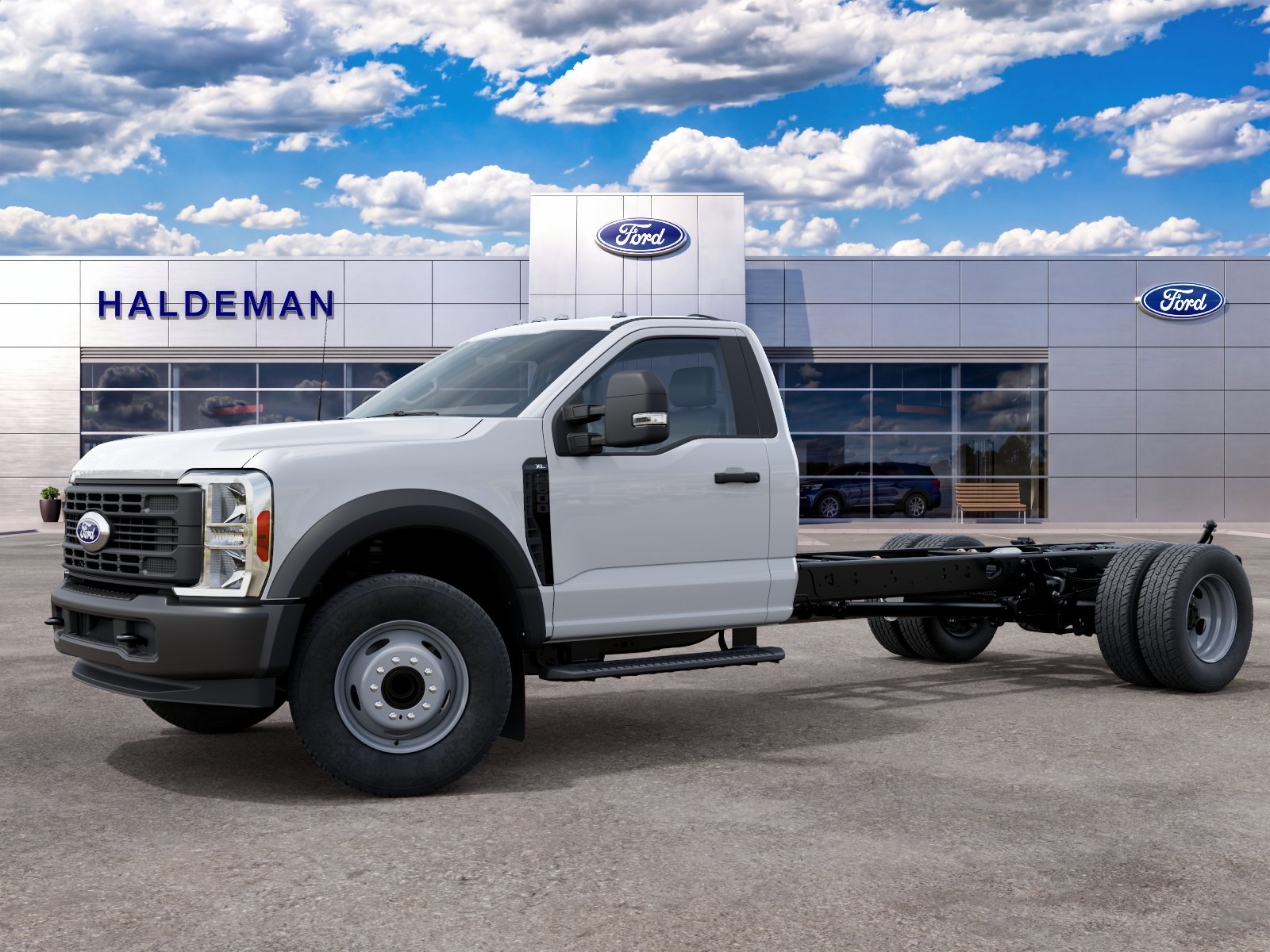
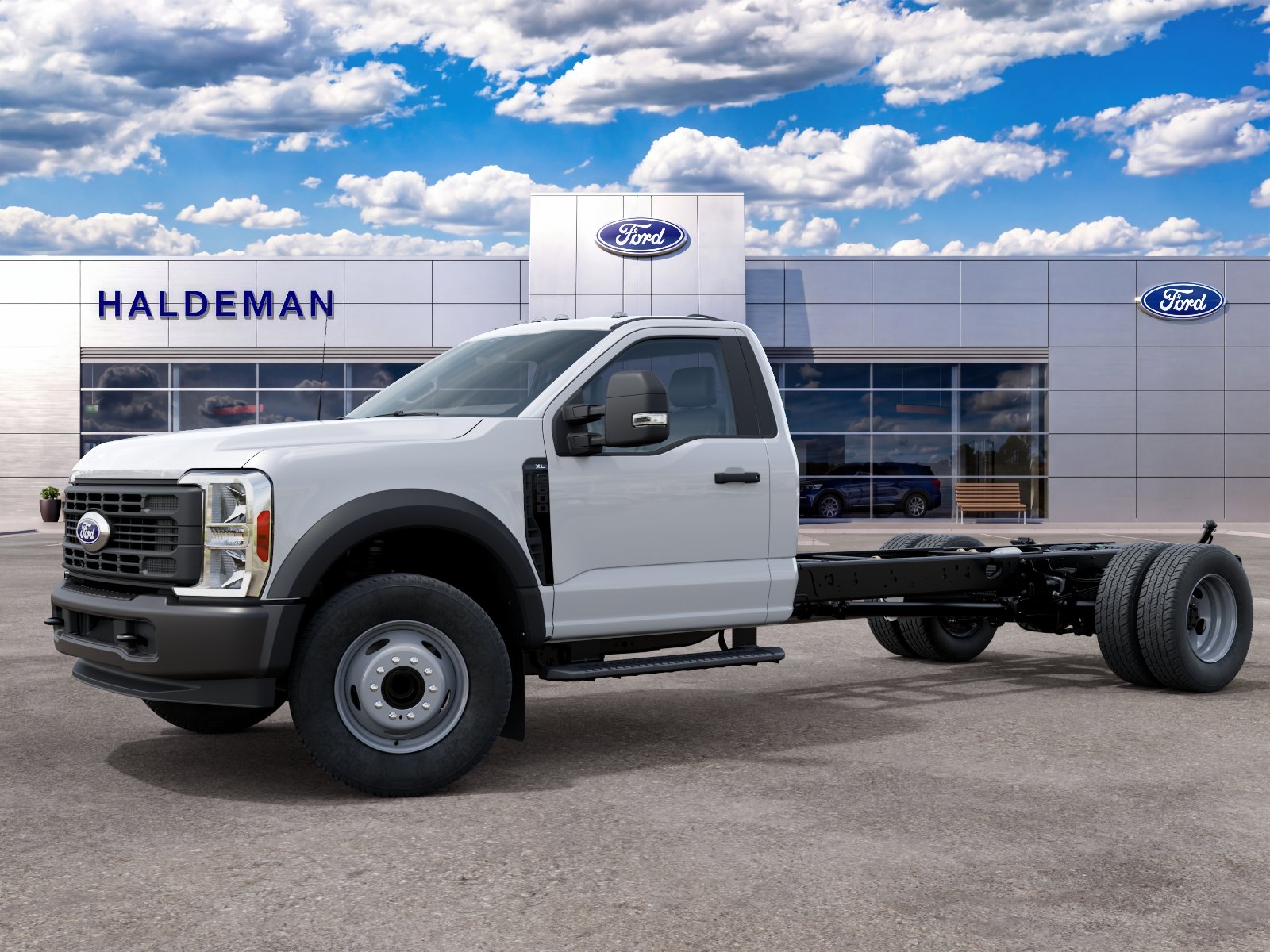
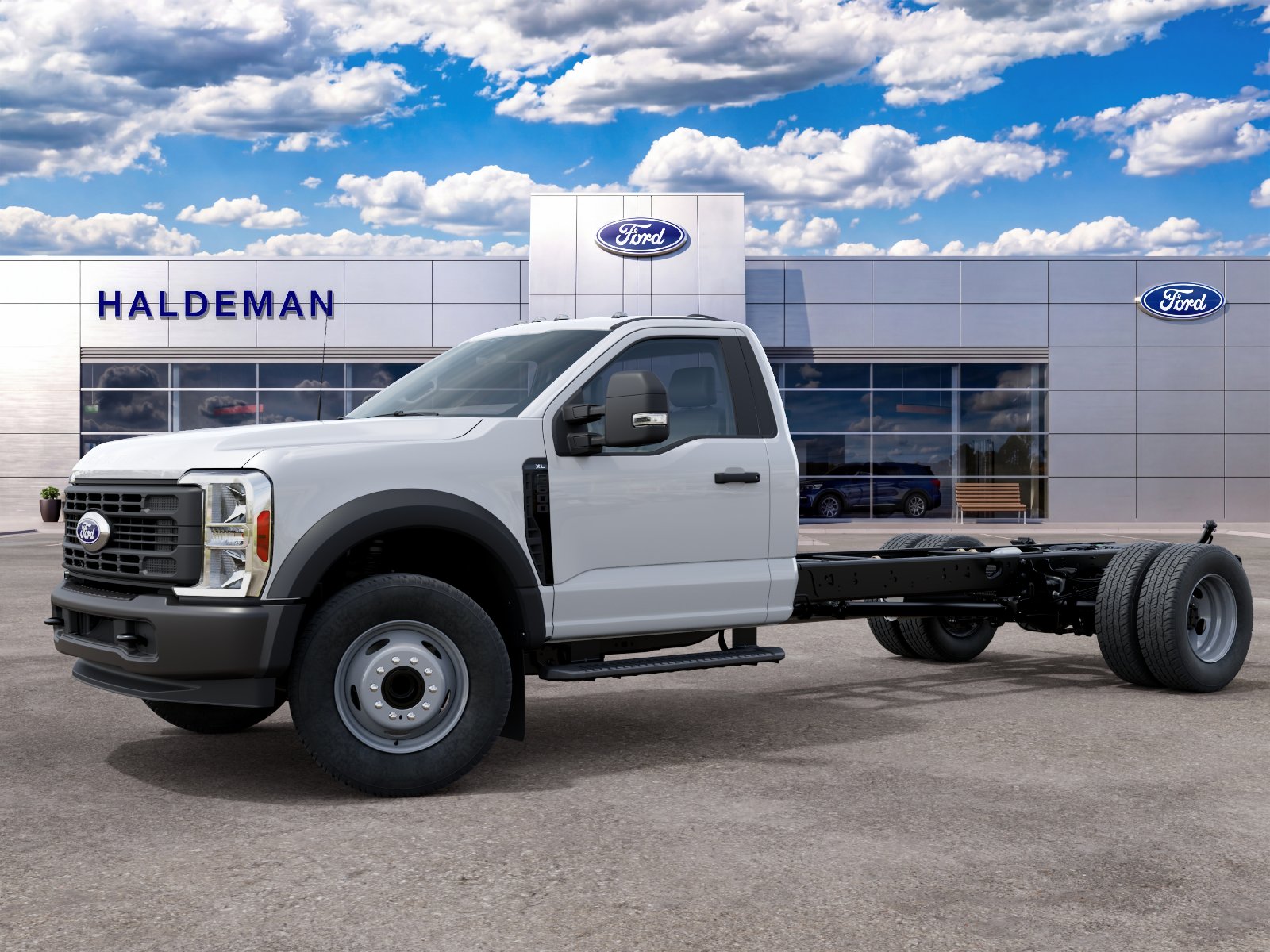
A winter road truck does three jobs at once. It pushes snow with a plow on the front, spreads salt or treated material from the back and, once the season turns, hauls stone, asphalt and debris in its dump body. Fleets in Trenton often look at the F-600 for that work because it can carry a larger dump body and a loaded spreader under a familiar Super Duty cab.
Each piece adds weight in a different place. The plow and its mount hang ahead of the front axle, a loaded spreader sits high and toward the rear, and a dump body full of wet salt weighs far more than the same body loaded with mulch. Balancing those loads between the axles is the first conversation with a body builder, long before color or cab style comes up.
- Ford offers plow-ready equipment options on Super Duty chassis cabs, and our staff can confirm which of them apply to a given F-600 build before it is ordered
- A central hydraulic system can run the plow, the dump hoist and the spreader from one control set in the cab, which simplifies training for seasonal drivers
- Liquid pre-wet tanks mounted on the body help salt stick to pavement and stay off the shoulder, a setup some road departments now write into their orders
Bigger dump bodies are the other reason fleets consider the F-600. A county or town hauling road patch, catch basin debris or fill between jobs can move more material per trip within the truck's rating, which means fewer runs back to the yard during a busy week. Our staff will compare the body sizes an upfitter offers against Ford ratings for each build.
A truck that plows in winter and hauls the rest of the year has to be planned for both seasons. That planning starts with the weight of every piece it carries.
Writing a Bid Spec That Bidders Can Answer
Most municipal and county trucks reach a road department through a public bid, and the specification written for that bid decides which trucks can respond. A spec that names one supplier's part numbers, or a dimension only one body builder uses, narrows the field and can stall a purchase. Describing requirements in terms of the work keeps the bid open and the responses easy to compare.
Fleet managers drafting a spec can ask Haldeman Ford for chassis data sheets and body builder contacts before the bid goes out. Purchasing rules differ from town to county, and some public buyers also use cooperative or state contract purchasing, so your purchasing office decides which route applies to a given truck.
- Mark every required item as either mandatory or preferred, so bidders know which features are firm and which can be met with equivalent equipment
- Ask bidders to describe the chassis and the body on separate lines, which makes it easier to compare responses built around different upfitters
- Delivery timing belongs in the spec itself, because a plow truck that arrives after the first storm misses much of the season it was bought for
After an award, the chassis order and the body build move in parallel. Our commercial staff keep the fleet manager posted as the chassis is scheduled and shipped to the body builder, so the town knows when to plan its inspection and acceptance. Departments replacing several trucks can stagger deliveries to match their own replacement schedule.
A clear spec protects the public buyer and the bidders alike. It keeps the purchase fair and gets the right truck into the yard when it is needed.
County Roads and Route 31 When Snow Falls
When a storm arrives, state crews generally keep the larger corridors moving while county and municipal trucks cover the roads that branch off them. Around Trenton, that means state plows working Route 31 heading north, county trucks on the roads linking one township to the next, and town crews squeezing through older neighborhoods where parked cars leave little room to push snow.
Those routes shape the truck. Open county roads with ditches and few curbs favor a wider plow and a spreader that throws material across the whole lane, while tight city blocks call for a shorter wheelbase and a blade that angles well in close quarters. Many fleets end up with a mix of builds instead of one truck for every route.
- Tall spreader hoppers raise the overall height of the truck, so measure the salt barn doors and any low underpass on the route before ordering
- Plow lights mounted above the hood keep the truck visible and the road lit in blowing snow, when a raised blade can block the standard headlights
- Crews running overnight storm shifts value a quiet cab, heated mirrors and seats that stay comfortable long after midnight on a slow county route
Salt is hard on any truck. Underbody washes after each storm, a coated or stainless spreader and regular checks of brake lines and body mounts all slow the corrosion that shortens a plow truck's working life. Ask the body builder which finishes hold up to liquid brine as well as rock salt, since many routes now see both.
The roads a truck clears every storm should shape each line of its build. A county route and a city block rarely want the same F-600.
Financing and Retiring Salt-Worn Trucks
Public fleets usually buy through their own purchasing process, while private snow contractors who plow for towns, schools and commercial lots often finance their trucks. Our finance office can walk a contractor through commercial financing and the documents a lender expects from a business, including how a body ordered from a separate builder fits into the paperwork.
Older plow trucks wear in predictable ways: rusted frames and body floors, tired hydraulics and spreader chains that have seen too many winters. Haldeman Ford appraises a trade with its plow, spreader and body as one complete truck, and the condition of each piece shapes the offer. Some fleets pull the plow first to reuse it on the new truck when the mount is compatible.
- Towns that usually retire trucks through a public auction can still request a trade appraisal first, then compare the two paths before deciding
- Contractors who plow commercial lots under seasonal contracts can bring those agreements along, since they help a lender understand the income the truck supports
- Keeping one plow mount style across the fleet means blades can move between trucks when one unit breaks down mid-storm
Some fleets keep one retired truck as a spare for the heaviest storms before selling it, which gives drivers a backup without adding a full-time unit. An appraisal now and another closer to the deadline keep the final decision on a fresh number. Either way, the outgoing truck's service file helps the next owner and strengthens the offer.
A worn plow truck still has value, and planning its exit protects the coming winter. Retire it on your schedule, not in the middle of a storm.
Service Between Storms and Before the First Flake
Plow trucks spend much of the winter waiting for weather, then run for long stretches once it arrives. The quiet weeks before the season are the time for chassis maintenance, and Haldeman Ford can book a pre-season check covering brakes, steering, lights and the front end that carries the plow.
Ask our service advisors how repairs are prioritized during storm season, since a downed plow truck leaves a gap in somebody's route. The plow, the spreader and the hydraulic pump usually go to the equipment dealer or body builder, while the Ford chassis stays with our technicians, so knowing who handles which part saves a lost day.
- Grease the plow pivot points and inspect the cutting edge before the first storm, since a worn edge lets the moldboard scrape the pavement and wear quickly
- Spreader chains and spinners corrode fast when salt sits in them, so rinse and lubricate them after each event before the truck parks for the night
- A spare set of plow lights, hoses and pins kept at the yard turns a breakdown after midnight into a short fix rather than a lost route
After the last storm, a thorough wash and inspection catches cracked welds, loose body mounts and corroded wiring before summer hauling begins. Writing those findings into each truck's file helps a fleet manager decide which units stay in service and which go into the next bid.
An F-600 built for winter roads works hardest when the weather is worst. Keep it maintained through the off months and it stays ready for the first storm call of the season.
A road truck is judged on the worst night of the winter. Talk through the routes, the bid and the body with Haldeman Ford, and we will shape an F-600 ready for that night.